
How God Can Use Any Church
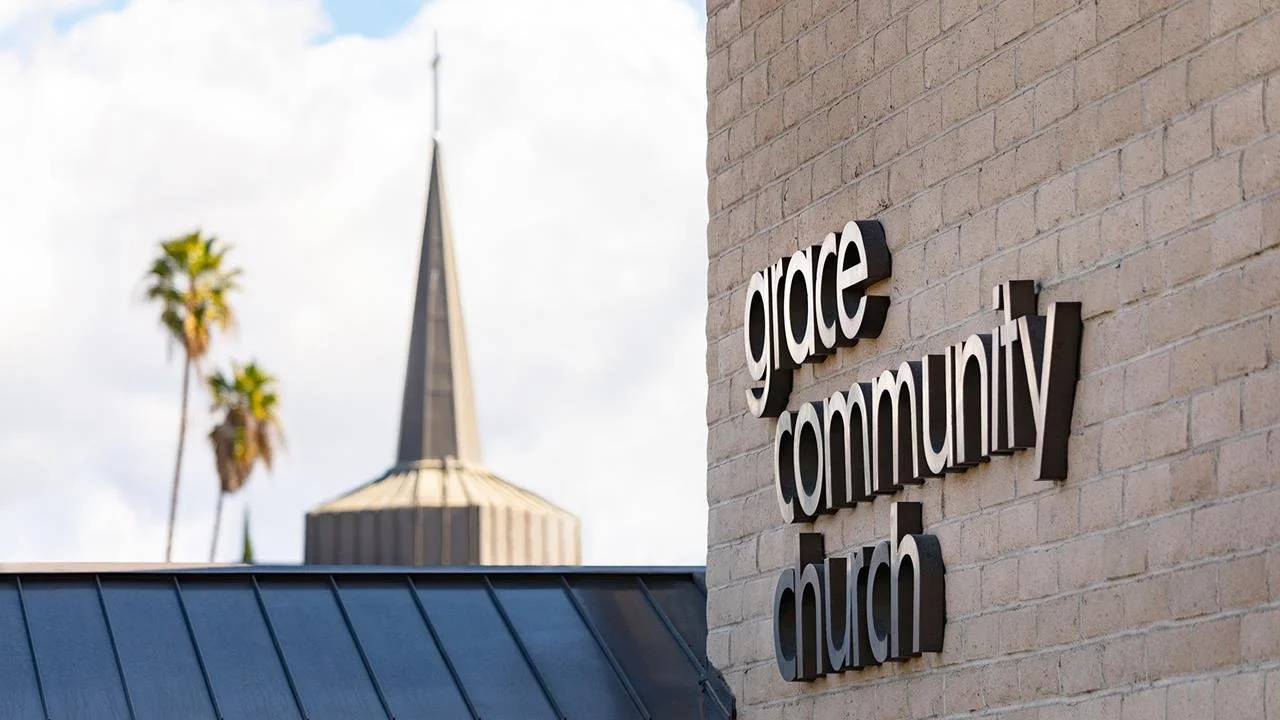
A Global Ministry, A Local Focus
On July 12, 2026, Grace Community Church will celebrate seventy years as a local congregation.
What began as a small local church of a few families—and chicken coops outside the chapel—has become a church of seven thousand on a given Sunday.
Today, the church is known around the world.
It is home to ministries that have shaped believers, pastors, and churches across the globe. Through Grace to You, millions have heard expository preaching. Through The Master's Seminary, generations of pastor-teachers have been trained to rightly handle the Word of God. Through The Master's University, students have been equipped to think biblically in every vocation. And through The Master's Academy International, faithful indigenous men are being trained to shepherd Christ's church in twenty countries.
Yet none of those ministries was the original goal.
The story of Grace Community Church is not ultimately one of organizational growth or international influence. It is the story of what God delights to accomplish when one local church is devoted to the ordinary work He has prescribed: faithfully preaching His Word, shepherding His people, and equipping faithful men for ministry.
It is also a reminder that this pattern is not unique to one church in Southern California. It is God's pattern for every faithful church.
The Biblical Priorities
When twenty-nine-year-old John MacArthur became pastor-teacher of Grace Community Church in 1969, he did not arrive with aspirations of building an international ministry.
Instead, he summarized his calling in remarkably simple terms.
"I told the elders I wanted to do two things," he later recalled, "preach the Word of God and train up other men to do likewise."
That conviction never changed.
"I never had a strategy to build a church,” he said, “I only had a strategy to understand the Scripture and proclaim it accurately." Or, as he often stated, "I focused on the depth of the ministry and left the breadth of it to God."
These statements were more than personal preferences. They reflect a biblical philosophy of ministry.
“I focused on the depth of the ministry and left the breadth of it to God.”
John's heart beat primarily for his local congregation because he understood the biblical calling of a pastor. Because the local church is Christ's appointed means for making disciples, faithfully preaching the Scriptures and shepherding His flock were never one ministry among many—they were the very heart of the ministry.
Week after week, year after year, he devoted himself to feeding Christ's flock through the faithful exposition of Scripture, believing that the spiritual maturity—not organizational growth—of the church was the true measure of ministry.
That conviction would become the impetus for everything that followed.
Meeting the Needs
The ministries of Grace Community Church did not arise from institutional ambition—they arose from pastoral need.
Grace to You did not begin because someone envisioned an international media ministry. It began because members of Grace Community Church who were sick or homebound wanted to hear the preaching they were missing. As John shared, "There was a man in the church who started recording the sermons because there were people who couldn't come... I had nothing to do with it."
What began as an act of shepherding one local congregation soon spread far beyond Southern California. By 1973, the tapes were circulating widely, and in 1977 Grace to You was launched on radio. Around the world, people who had never experienced verse-by-verse exposition began asking for more.
The Master's Seminary followed the same pattern.
As more men within Grace Community Church desired preparation for pastoral ministry, the church first sent students to Talbot Seminary before eventually establishing its own seminary in 1986. As John explained, "The seminary was born because there were so many men in our church who wanted to be trained for ministry that we couldn't send them all away to another seminary."
Its purpose was never merely academic.
"The seminary existed for the maturity of the church,” he said. “Its goal was to create churchmen."
Men whose ambition was not to build platforms or be ministry entrepreneurs, but faithful shepherds devoted to Christ's church.
Every ministry began the same way: by meeting the needs of the local church.
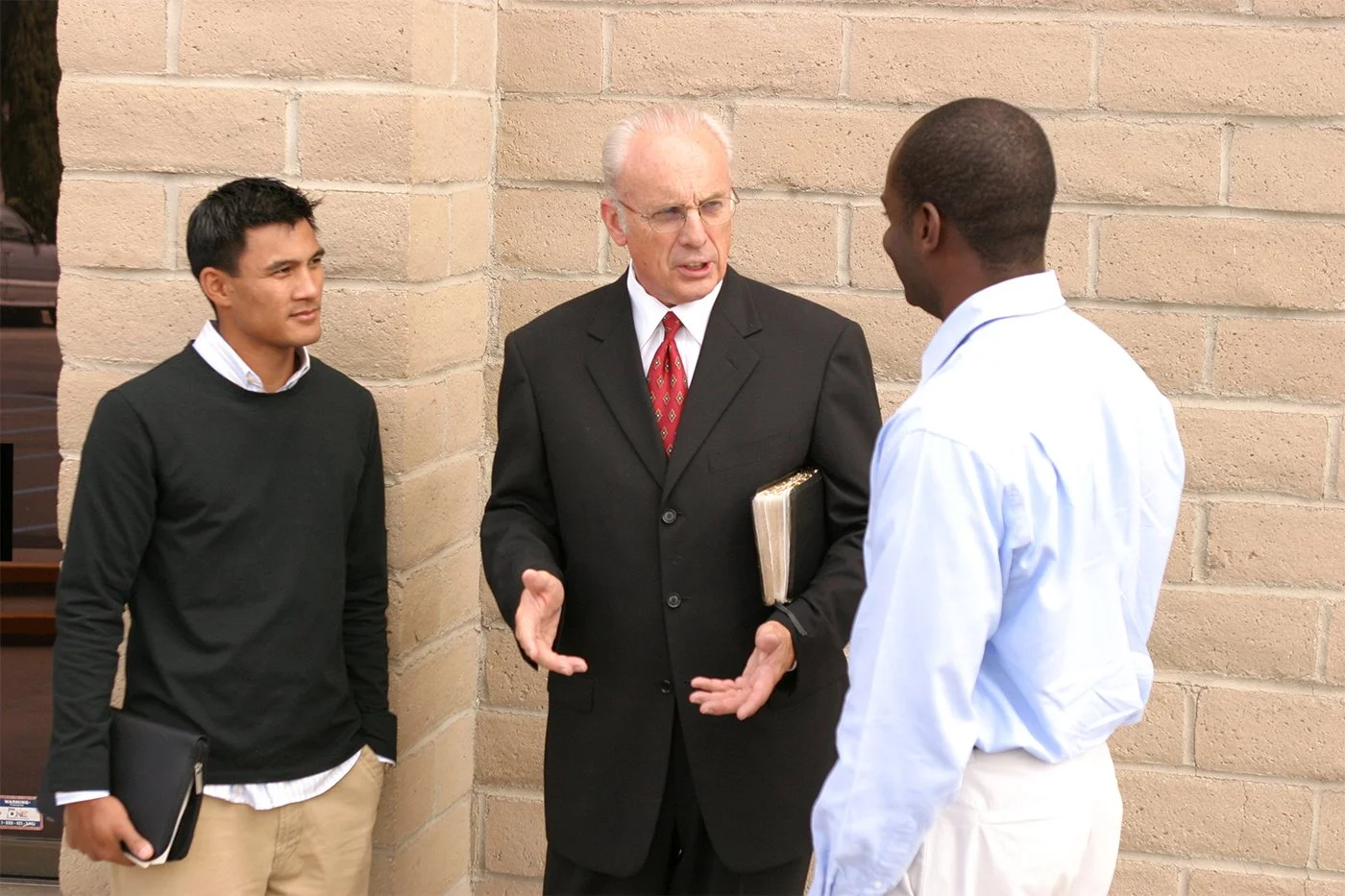
John MacArthur talking with students at The Master’s Seminary
When the Nations Came Calling
As Grace to You reached countries long deprived of sound biblical teaching, something unexpected happened.
Following the fall of the Iron Curtain, believers throughout Ukraine and the former Soviet Union eagerly copied and shared John MacArthur's sermon tapes, passing them from church to church because faithful exposition of Scripture was so scarce.
This simple ministry to serve members of Grace Community Church was now nourishing believers thousands of miles away.
Yet the tapes also exposed a deeper need.
Faithful sermons could feed the church, but they could not replace faithful shepherds. As false teachers flooded the former Soviet Union with false doctrine, church leaders pleaded for help to train men who could rightly handle God's Word. After being exposed to sound, expository preaching, the local churches in Ukraine asked for John’s help to fill a need: teach us to preach.
John later recalled that they feared "the incoming errors" accompanying their newfound freedom.
"There was a need for some intense training to prepare a generation of pastors," he said. "That started in the Ukraine. That was kind of the first model."
Immediately, men of Grace Church—trained at the Master’s Seminary—sacrificially and gladly took their families to go share what they had been taught.
From that need, The Master's Academy International (TMAI) was born.
“The same conviction that shaped one local church in Southern California now shapes churches around the world”
Today, TMAI equips indigenous pastor-teachers in twenty countries to faithfully preach the Scriptures and strengthen Christ's church within their own communities. Its global reach is not a departure from Grace Community Church's ministry philosophy—it is its continuation.
The same conviction that shaped one local church in Southern California now shapes churches around the world: feed Christ's flock through the faithful exposition of His Word, train faithful men to do the same, and entrust the results to God.
That is not Grace Community Church's model.
It is the biblical pattern.
Repeating the Pattern
Seventy years later, it would be easy to look at Grace Community Church and conclude that its story is impossible to repeat.
However, this would miss the lesson.
The defining mark of Grace Community Church was never its size, its influence, or even the ministries that have grown from it. It is its steadfast commitment to the priorities God has established for His church: the faithful preaching of His Word, the shepherding of His people, and the equipping of faithful men to shepherd others.
Everything else has been the Lord’s work.
GTY, TMS, and TMAI are not the result of pursuing a global platform. They are the fruit of a local church devoted to the sufficiency of Scripture and a pastor committed to feeding Christ's flock, leaving the breadth of the ministry in God's hands.
God can use faithfulness in any nation, in any circumstance. A Grace Community Church could be anywhere, could be any church.
“Grace Community Church is ultimately just one example of what God delights to do through any church that is wholly committed to His Word.”
It can be found anywhere faithful men open the Scriptures, shepherd Christ's flock, and entrust the truth to others. Whether in Los Angeles or Lagos, Ukraine or Uganda, the Lord delights to build His church through ordinary pastors serving ordinary congregations with extraordinary faithfulness to His Word.
Grace Community Church is ultimately just one example of what God delights to do through any church that is wholly committed to His Word.
That is why the ministry philosophy that shaped Grace remains at the heart of TMAI today. Our core values remain the authority of Scripture and the centrality of the local church. We seek to strengthen local churches by training faithful shepherds who will preach the Word, be churchmen caring for Christ's flock, and equip the next generation to do the same.
Perhaps that is Grace Community Church's greatest legacy so far—not that it sought renown, but that it demonstrated a biblical pattern that, by God's grace, can be lived out by faithful churches in every nation.
To learn more about our 20 Member Schools click the button below.