
Open Doors in Africa
This story is Part Two of our year-end campaign: Equipping the Nations to Reach the Nations.As you read what God is accomplishing around the world, we invite you to partner in this ministry by supporting student scholarships with a year-end gift. Our goal is to raise $2.5 million by December 31 to continue equipping pastors across our 19 member schools.
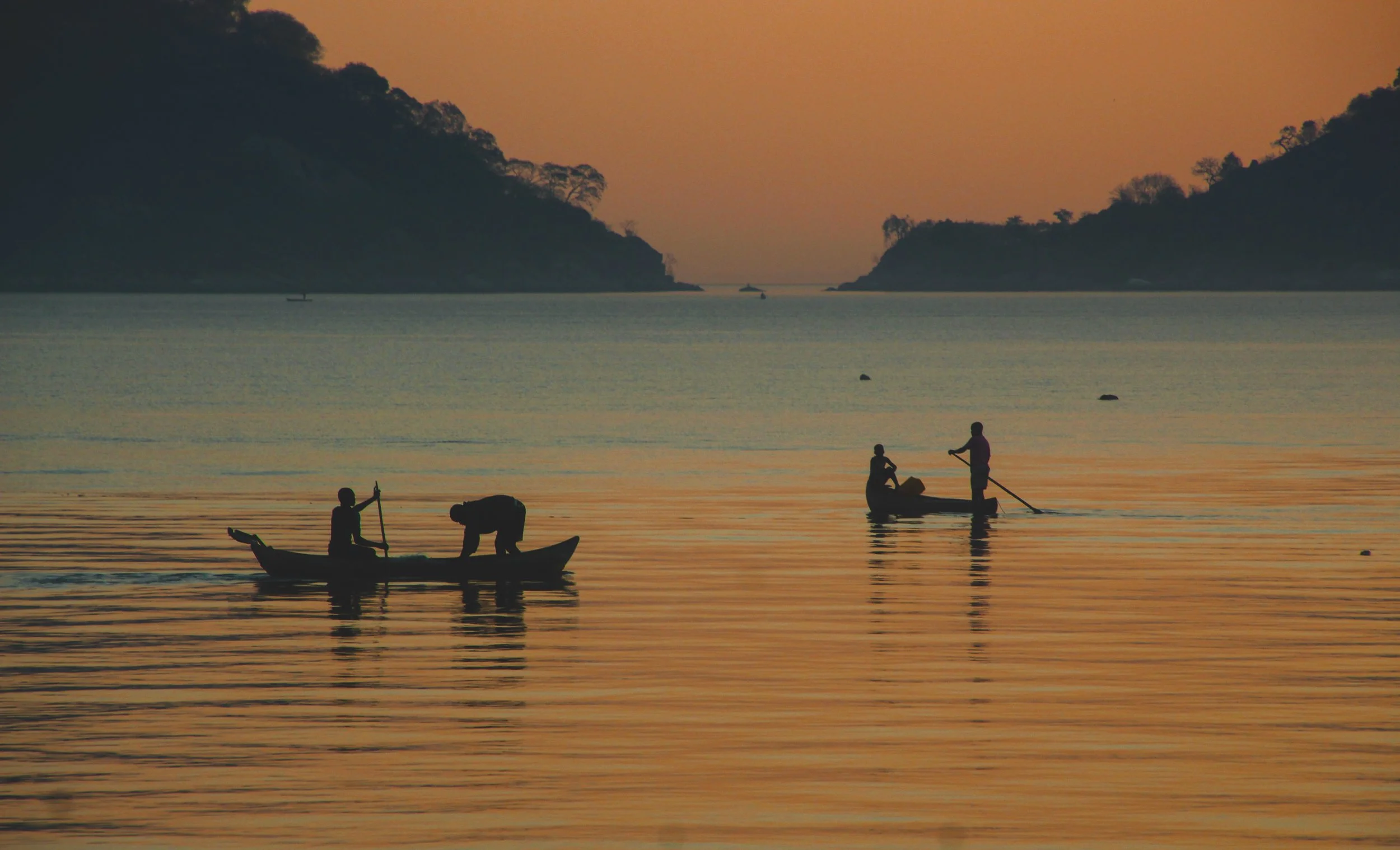
Every evening, Malawians see the fiery sun sink behind the horizon of Lake Malawi, the third largest lake in Africa. Its clear waters are a lifeline for local families, with thousands of fish caught daily and hundreds of boats crossing from shore to shore.
But for the Yao people who live across the southern end of the lake, it is also a natural barrier, sealing them in one of the most remote parts of the country. For centuries, the Yao have been shaped by Islamic influence, remaining largely closed to Christianity.
But to Central African Preaching Academy (CAPA), reaching this area of spiritual darkness is a great opportunity for biblical churches in Malawi. Over the last year, CAPA has begun sending faculty members and biblical resources to a small fellowship of pastors in the Mangochi district. These men are sincere and eager to learn—yet most have never received any training.
“The Yao have been an unreached people for centuries and live within our borders here in Malawi!” Kellen Hiroto, director at CAPA, explained. “God has called us to take up our part in the work amongst the Yao.”
This developing ministry is the direct result of CAPA’s long-term commitment to strengthening churches in the region.
Doors in Africa
Before CAPA ever reached the remote villages across Lake Malawi, God had already been opening doors across Africa. TMAI began training African pastors in 1999 with Christ Seminary (CS) in Polokwane, South Africa. Fifteen years later, CAPA was established in Lilongwe, Malawi. Today, through the continued partnership of TMAI’s supporters, new training centers are also taking shape in Uganda and Madagascar.
Student scholarships have made it possible for generations of pastors to receive biblical training and then return to their villages with a renewed burden for the gospel. As more pastors grow in their understanding and teaching of Scripture, local believers begin to recognize the need for more equipping.
A similar pattern unfolded in Mangochi district.
Last year, two missionaries approached CAPA about the need in the region. In God’s timing, the training center had just launched an extension program to bring intensive, week-long training to rural areas. CAPA quickly reached out to a fellowship of pastors in Mangochi district with the idea to open a modular training site there.
The response was simple. Please bring your teaching.
The Long Way Around
In September 2024, CAPA’s team prepared to travel around the lake for their first trip to Mangochi district.
Journeying to the village where the training would be held proved to be the first challenge.
To make the trip from Lilongwe, the team had two options. The first was a 3–4 hour boat ride across the lake. But gusty winds and small vessels are known to be unpredictable.
The second option was a long drive around the southern tip of the lake. This route takes between eight and ten hours, winding through hilly terrain and washed-out bridges—impassable during the rainy season.
“You can brave the road, and maybe you’re pushing a truck through a river—that's the reality,” Kellen explained.
“Student scholarships have made it possible for generations of pastors to receive biblical training and then return to their villages with a renewed burden for the gospel.”
When the CAPA team finally arrived in Mangochi district, they were reminded that the Yao people are hard to reach in more ways than one. Their Muslim background (a product of the historic Arab slave trade along the lake) and the opposition of tribal chiefs have kept this region closed. Small churches have largely been relegated to land outside the village, limiting their influence among the people. But it is not just geography that hinders them.
“Most of the pastors of these small churches in Mangochi district have little to no training in Bible, theology, and pastoral leadership,” Kellen shared. “They are doing the best they can with what they know, but for the most part their depth of understanding is very limited.”
These pastors were striving to minister to their congregations, but they lacked a theological foundation. Many did not even own a personal Bible. CAPA’s team quickly realized, “If the leaders have not been exposed to this, their members are even further behind.”
During the first year, CAPA’s faculty focused on essential topics like the gospel, marriage and parenting, and the church. With each lesson, the students responded with sincerity and conviction.
“What does it mean to be God’s church?”
“We need to reconsider our process for membership.”
“What if someone with multiple wives wants to become a member?”
“We have never considered church discipline.”
“I don't think I have been preaching the biblical gospel, and I need to go back and correct this.”
These probing questions revealed a growing understanding of Scripture and a willingness to apply its instruction.
This is Our School
One year later, the pastors in Mangochi district continue to receive their training with joy. Some of these men even trek long distances on foot in their eagerness to learn.
Kellen said, “The students describe it as “their school” and are making sacrifices to be present for the training. This is incredibly humbling and motivates us to devote time and travel to making this training possible.”
“CAPA’s students are now looking to the most remote and difficult parts of their country as they pursue obedience to the Great Commission. Their preparation is the result of countless prayers and investments in TMAI’s ministry.”
What once was an isolated and resistant community is now a place where Scripture is taking root. CAPA’s students are seeking creative ways to minister to an often-hostile Muslim community. Future opportunities may involve sports outreach or opening a school in the community. This evangelistic emphasis is the natural result of healthy, biblical training.
Kellen shared, “We want our students and faculty to develop a heart for serving in rural areas and also amongst the Yao, who desperately need the gospel. We are excited about obeying God's command to send men to church-planting and missions. We want to increase our partnership with brothers and sisters already working there and play our part in the work God is (and will be doing) there for years to come.”
CAPA’s students are now looking to the most remote and difficult parts of their country as they pursue obedience to the Great Commission. Their preparation is the result of countless prayers and investments in TMAI’s ministry.
Scholarships for TMAI students remain an urgent need for the advancement of God’s Word in places like Mangochi district, where pastors have little to no access to biblical training. Your support enables these men to receive the instruction they need to lead their churches and bring the hope of Christ to the Yao and other unreached peoples.
Your year-end gift will make it possible for our students to continue their training and advance the spread of the gospel. This year-end, our goal at TMAI is to raise $2.5 million for student scholarships across our 19 member schools. Please consider making a gift by December 31st, 11:59 PM PDT. If you’d like to support us in this way, please click the link below.